How to Choose Paint for Office Walls
The right paint makes an office look professional and stay clean longer. This guide covers the finishes and colors that hold up to daily wear.
Which paint finish works best in an office?
The finish matters as much as the color. It determines how the wall handles daily contact, light, and cleaning. Three finishes cover most office needs.
- Matte hides uneven plaster and patch repairs better than any other finish. It cuts glare from overhead lights and windows, which matters in rooms full of screens. The trade-off is lower scrub resistance: a matte wall wiped too often polishes to a shiny patch.
- Satin sits in the middle. It reflects enough light to brighten a corridor or a meeting room without the shine of a gloss. You can wipe it clean with a damp cloth, and it holds up to chair backs and passing shoulders in narrow hallways.
- Eggshell has a faint sheen, a little more than matte. It cleans more easily than matte but reflects less light than satin, so it works well in executive offices and low-traffic areas where you want a soft look with occasional wipe-downs.
- For kitchens and washrooms choose a semi-gloss or a dedicated kitchen paint. Standard matte and eggshell will not survive the moisture and frequent scrubbing these rooms need.
Match the finish to the traffic. A private office can take matte or eggshell; open-plan areas, corridors, and reception do better with satin.
What colors make an office feel bigger and brighter?
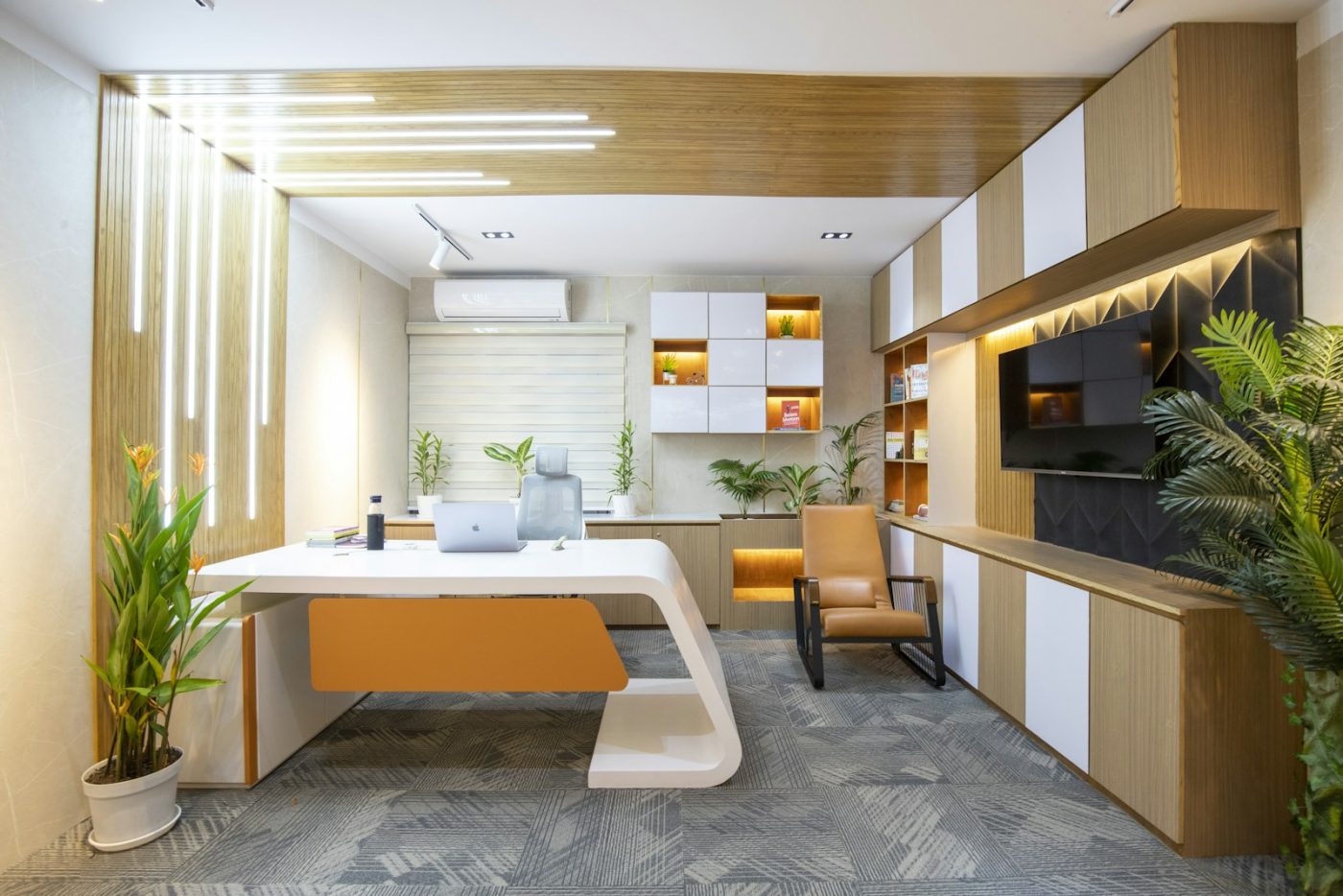
Light reflectance value (LRV) measures how much light a color bounces back into the room. A white with an LRV above 80 sends most light back, while a deep navy might reflect only 5%. In a small or windowless office, picking a wall color with an LRV of 60 or higher prevents the room from closing in and reduces the need for extra fixtures.
Soft neutrals like warm off-white, pale greige, and muted ivory do two things at once. They spread available light evenly across the walls and sit quietly in the background, so the eye stays on the task. Cool whites with a faint blue or green undertone read as clean and clinical, which suits a medical or dental office. Warmer undertones in beige or cream make a consulting room feel less sterile without darkening the space.
- An LRV above 75 keeps ceiling lines light and makes a low ceiling feel higher.
- Painting walls and trim the same color removes visual stops, so a narrow corridor reads as wider.
- A single accent wall in a slightly deeper tone adds depth without stealing light from the other three surfaces.
- Matte and eggshell finishes soften glare from overhead panels, which helps screens stay readable.
How do you prepare office walls before painting?
Paint bonds best to a clean, dry and sound surface. Skipping preparation is the most common reason office paintwork fails early, especially on walls that chairs and equipment brush past.
- Dust walls and baseboard with a microfiber cloth or a vacuum with a brush attachment.
- Wash greasy or marked areas with a mild sugar soap solution and rinse with clean water, then let the wall dry fully.
- Scrape away loose or flaking paint with a filling knife and sand the edges until they are flush with the surrounding surface.
- Fill cracks, nail holes and dents with a lightweight interior filler, leave it to set and sand it smooth.
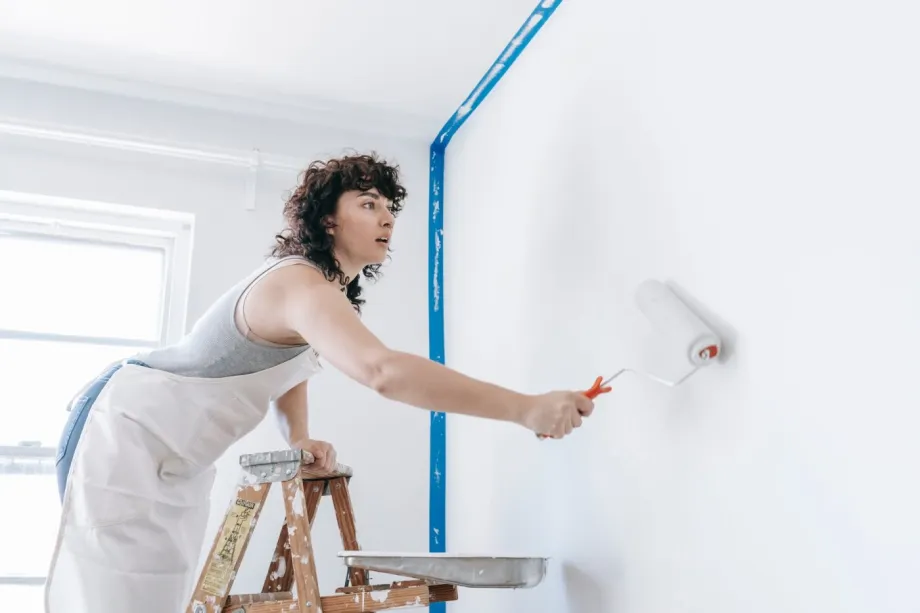
- Mask door frames, window sills, sockets and light switches with low-tack tape and lay dust sheets across the floor.
- Apply one coat of acrylic primer to bare plaster, filled patches and any stained areas to block them showing through the topcoats.
Once the primer is dry, run your hand over the wall to check for rough spots you may have missed. A surface that feels even to the touch will give you a consistent finish and make the paint last longer in a busy office.
How long does painting an office take?

Painting a room of about 220 square feet, from first preparation to the final coat, typically takes 1-2 days. Smaller spaces or a single accent wall can be finished in under a day, while open-plan areas with high ceilings often need 3-4 days.
Each coat of water-based paint is dry to the touch within 2-4 hours, but you should wait at least 6 hours before applying the next one. Low-odour and quick-drying paints let you schedule work around business hours with less downtime. Many crews do the prep and the first coat after hours, then return the next morning for the final coat, so the room is usable by the afternoon.
What paint stands up to scuffs and frequent cleaning?
Paint with a satin or semi-gloss sheen resists scuffs better than flat or matte finishes because the surface is smoother and less porous. In corridors, lobbies and break rooms where people brush against walls, satin hides minor marks while semi-gloss wipes clean with a damp cloth without leaving a shine patch.
Water-based acrylic and latex paints labeled as scrubbable or high-durability hold up to frequent cleaning. Two-component epoxy coatings suit the busiest areas, though they need professional application and proper ventilation during curing. Alkyd enamels also offer good wear resistance but yellow slightly over time in low light.
- Satin or semi-gloss sheen, not flat or eggshell, for walls that get touched often.
- Scrubbable acrylic latex rated for at least 400 scrub cycles per the paint’s technical sheet.
- Two-component epoxy for utility corridors and kitchenettes where walls face moisture and heavy traffic.
- Alkyd enamel where a harder film is needed, with the trade-off of gradual yellowing.
- Darker colors in satin show scuff marks less than light colors in the same sheen.
Frequently asked questions
Can you paint an office while people are working?
Yes, if you use low-odour water-based paint and section off the area. The painters work one part of the floor at a time, and the smell usually clears by the next morning.
Does the paint color affect how people feel at work?
Cool blues and greens tend to help with focus, while warm neutrals make a room feel calmer. A feature wall in a stronger color can add energy without overwhelming the space.
How often should office walls be repainted?
High-traffic areas like corridors and meeting rooms typically need repainting every 3-5 years. Private offices and low-traffic spaces can go 5-7 years before the walls look tired.