
How Commercial Spray Painting Works
Commercial spray painting coats large surfaces fast with an even finish. This article explains the process, the equipment used and how long a typical job takes.
What is commercial spray painting?
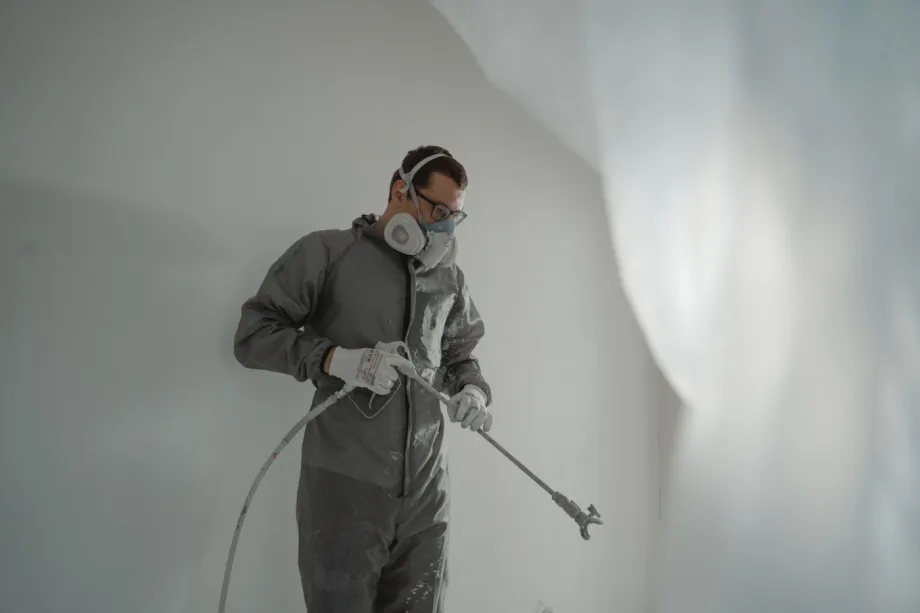
Commercial spray painting applies paint with a pressurised spray gun instead of a brush or roller. The gun atomises the coating into a fine mist that lands evenly on the surface and forms a smooth film without brush marks. On large, flat areas a spray gun covers the surface several times faster than hand tools. The method is standard for warehouses, offices, retail units and industrial facilities.
A professional rig draws paint from a pot or a pump system and pushes it through the nozzle at a controlled pressure, typically between 1 500 and 3 000 psi for airless units. The painter walks the gun in steady, overlapping passes while keeping the tip at a constant distance from the wall. This produces a uniform thickness across the whole job. Masking and containment are part of every project because the mist can drift.
Which surfaces can be spray painted?

Commercial spray systems work on most materials you find in a factory, warehouse or office. The key is matching the coating to the substrate so the finish bonds properly and lasts under daily use.
- Metal: structural steel, handrails, shutters, cladding and storage tanks all take spray coatings well. A primer is needed to prevent rust on ferrous metals.
- Wood: doors, panelling, roof trusses and joinery can be sprayed. The paint fills grain evenly, but open joints and knots must be sealed first.
- Concrete: precast panels, soffits and block walls are common. The surface needs to be cured and dry; a filler or sealer evens out the porosity before the topcoat.
- Plaster and drywall: ceilings and partition walls spray quickly. New plaster requires a mist coat, while previously painted drywall needs only a light sand and wipe-down.
- Rigid plastics: uPVC window frames, trunking and fascia boards can be sprayed with specialist adhesion primers. Flexible or oily plastics are less suitable and need testing first.
Glass and glazed tiles are not recommended because the coating will not key reliably. For any surface, a test patch on a small area confirms adhesion before the full job begins.
How long does a commercial spray job take?
Most commercial spray jobs take 2 to 5 working days from start to finish. A small office with walls and a ceiling might be ready in two days, while a large warehouse or a retail space with metal racking can take a full week. The timeline depends on the area to cover, the number of coats, and how much moving and masking is needed.
Preparation often takes the largest share of the time: half a day to two days. Spraying itself is fast. A crew can coat 200 to 400 square metres in a day. Drying between coats adds 2 to 6 hours, depending on the paint, humidity and ventilation. Final curing usually takes 24 hours before furniture can go back in place.
- Furniture, stock and shelving that must be moved or covered
- High ceilings that need scaffolding or lifts
- Extra coats for a colour change over a dark base
- Oil-based or epoxy paints that cure slowly
- Poor ventilation that slows drying
- Working only outside business hours
What preparation is needed before spraying?
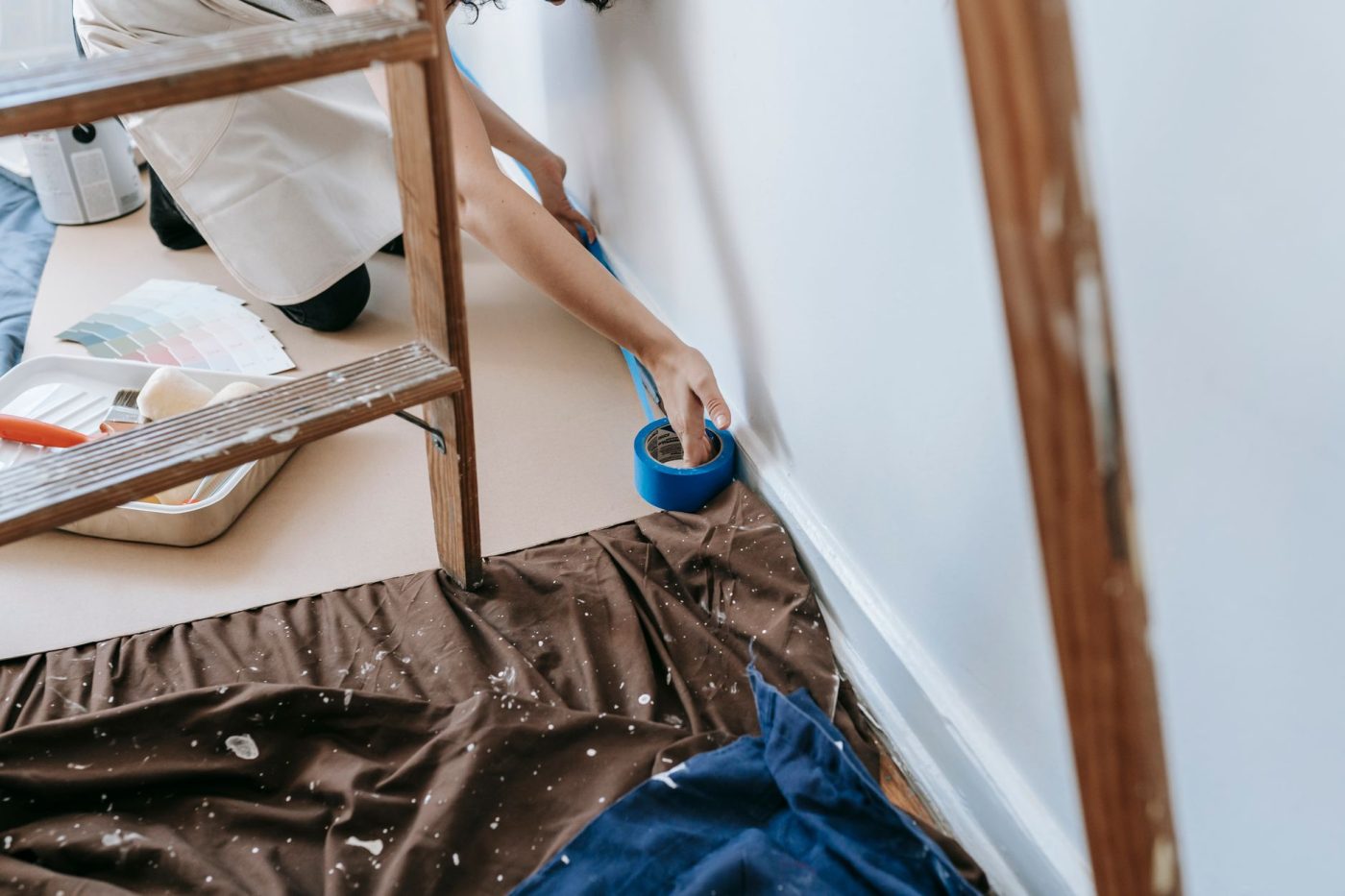
Thorough preparation determines how the finished surface will look and how long the coating will last. A professional crew typically spends more time on prep than on spraying. Skipping any stage leads to peeling, bubbling or uneven sheen within months.
The exact sequence depends on the substrate and the condition of the existing surface. The core steps remain the same across most commercial jobs.
- Clean the surface with a degreaser or TSP substitute to remove oils, silicone and loose dirt that block adhesion.
- Repair cracks, chips and dents with an appropriate filler and sand the patches flush once they cure.
- Sand the entire area to a uniform profile, usually P180-P240 grit for previously painted metal or woodwork.
- Mask off windows, door hardware, light fittings and adjoining surfaces with film and low-tack tape to get crisp edges.
- Wipe down every square foot with a tack cloth to collect sanding dust before the first coat.
- Apply a bonding primer suited to the substrate, which seals porous areas and gives the topcoat a consistent base to grip.
What equipment do professional painters use?
Professional teams use two main types of spray systems. An airless sprayer pumps paint at high pressure directly through a small tip, which atomises the coating without compressed air. This method covers large walls, metal decks and structural steel quickly and applies thicker coats in one pass. HVLP (high-volume low-pressure) systems use a turbine or compressor to produce a softer, controlled fan of air that carries the paint to the surface. HVLP gives a finer finish with less overspray, so it suits cabinetry, trim and areas where precision matters more than speed.
Both systems connect to a spray gun with interchangeable tip sizes. A contractor selects the tip based on the coating viscosity: a 0.011 to 0.013 tip for lacquers, a 0.015 to 0.019 tip for latex and acrylics, and a 0.021 or larger for heavy elastomeric coatings. A separate compressor, rated in CFM (cubic feet per minute), supplies air for HVLP guns and for drying surfaces between coats. The crew also wears full protective gear: a respirator with organic vapour cartridges, goggles and a disposable suit to keep mist and solvents off the skin.
How does spray painting compare to a brush and roller?
A spray gun atomises the coating into a fine mist, laying down a film that is typically thinner and more uniform than a brush or roller can achieve. On large flat surfaces such as warehouse ceilings, plasterboard partitions or metal cladding, the finish is smooth with no brush marks or roller stipple. The trade-off is that you lose the thicker build that a roller can deliver in one coat, which matters on rough substrates that need filling.
Speed is the main reason commercial contractors choose spraying. A two-person crew can coat 400-600 m² of open wall or ceiling in a working day, where rolling the same area might take twice as long. The time saved on application is partly offset by masking: every surface not being painted must be covered with film or paper, and adjoining rooms need sealing off. For a fit-out with finished floors, glazing and installed services, the masking stage can add half a day or more.
Cost follows the same logic. You pay less for labour hours on the spraying itself, but more for preparation materials and the specialist equipment. The job becomes cheaper than brush-and-roller work when the area is large and access is straightforward. In small rooms with many edges, sockets and switches, the masking effort can cancel out the speed advantage and make a roller the more practical choice.
Frequently asked questions
Is spray paint as durable as brushed paint?
Yes, when applied correctly. The durability depends on the paint type and surface preparation, not the application method. A properly primed and sprayed surface can last as long as one painted with a brush.
Can you spray paint in an occupied building?
It depends on the paint and the ventilation. Low-VOC or water-based paints produce less odour and allow work to continue in adjacent areas. The painters will mask off the workspace and use extractor fans to keep fumes contained.
What weather conditions stop outdoor spraying?
High wind, rain and temperatures below about 5 °C will delay the work. Wind causes overspray and uneven coverage, while cold or damp surfaces stop the paint from curing properly.