
Paint Colors and Coatings for Offices and Commercial Spaces
In an office, paint has to suit people staring at screens all day, survive carts and cleaning crews, and go on while the business keeps running. Colors and brand accents, tough low-odor finishes, phasing the work, and the safety items a painter must never cover.
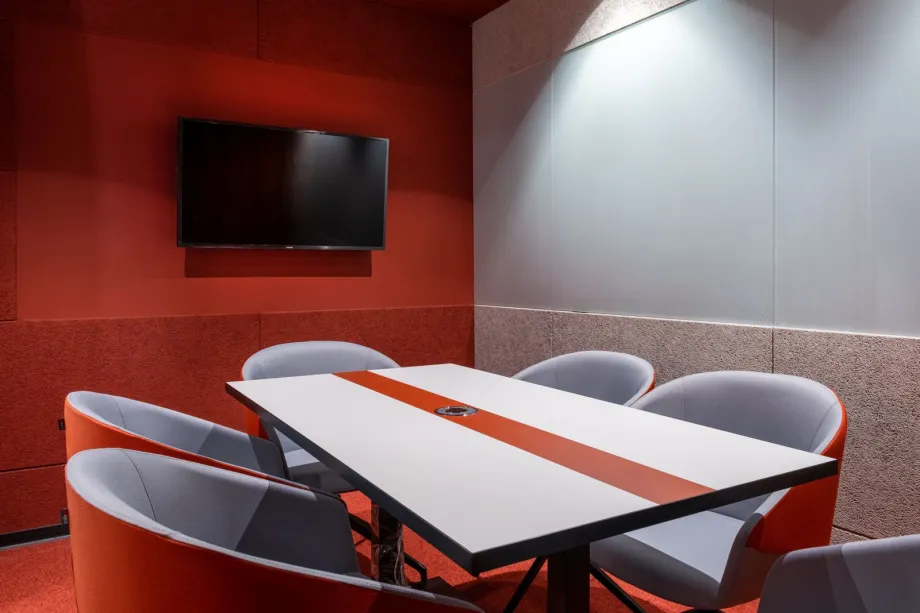
Selecting paint colors for focus and brand identity
Office paint choices affect visual comfort, ambient light levels, and daily concentration. Standardizing colors across floor plans creates consistency while accommodating different functional zones, from quiet work bays to active meeting rooms.
Balancing focus and light reflection
Wall color directly influences artificial and natural lighting efficiency. Paint manufacturers measure light reflection on a scale called Light Reflectance Value, running from zero percent for absolute black to one hundred percent for pure white. In open work areas, light off-whites, pale grays and warm greiges carry daylight deeper into the floor and need less help from the overhead lights, while a matte or eggshell finish keeps reflections off screens. Many designers keep strong, saturated colors to accents, because a whole wall of them is tiring to sit next to all day.
Expressing brand colors in subtle ways
Incorporating corporate identity into interior walls does not require wall-sized logo murals or intense graphics. Accent walls positioned behind reception desks, inside elevator lobbies, or along main hallway intersections integrate brand colors cleanly.
Using muted or desaturated variations of official corporate colors preserves professional atmosphere while maintaining brand harmony. For example, replacing a bright corporate navy with a slate blue or soft indigo delivers brand recognition without absorbing excessive light. Architectural features like column wraps, soffits, recessed niches, and window surrounds offer ideal targets for selective accent color placement.
Durable coatings for high-traffic commercial spaces
Commercial interiors endure constant physical wear from furniture movement, rolling carts, foot traffic, and hand contact. Selecting the correct resin binder and sheen level dictates how long a paint coating lasts before requiring touch-ups or full repainting.
Scrubbable finishes for corridors and break rooms
Standard residential flat paints lack the binder density needed to withstand regular cleaning. High-traffic commercial corridors, elevator banks, and break rooms require hard-curing acrylic or waterborne enamel formulas that pass standardized scrub resistance testing.
Eggshell and satin sheens provide a smooth surface with minimal gloss, hiding wall imperfections while offering washable surfaces. In break rooms, cafeteria areas, and restrooms where walls face frequent moisture, food splatters, and chemical sanitation, semi-gloss coatings or two-component waterborne epoxies create impermeable barriers. Waterborne epoxies resist harsh degreasers and scrub sponges without burnishing or shedding paint film.
Low-voc and zero-voc coatings for indoor air quality
In a sealed building with shared ventilation, paint odor travels between floors and offices. Many commercial specifications set VOC limits, often tied to state rules or green building programs, and third-party labels such as Green Seal or GREENGUARD Gold certify products for low emissions. Low-odor acrylics painted in the evening are usually tolerable for staff the next morning, with the ventilation running.
Scheduling and phasing commercial painting projects
Painting an operating commercial property requires detailed planning to prevent operational downtime, property damage, or occupant exposure to construction hazards.
Working off-hours and weekends
Executing commercial painting projects during off-hours minimizes disruption to business operations. Work schedules generally divide into night shifts starting after standard office hours or weekend shifts running from Friday evening through Sunday night.
Night shifts require precise daily setup and cleanup routines. Painters pack away equipment, clear trash and ventilate the area well before staff arrive. Weekend shifts allow larger continuous work windows, making them suitable for extensive surface preparation, drywall repairs, and multi-coat applications on main corridors or open office areas.
Containment and surface protection
Protecting tenant property requires systematic containment protocols before dipping a brush or setting up a sprayer. Heavy drop cloths or flame-retardant plastic sheeting must cover modular furniture, computer monitors, copiers, and artwork.
Floors demand heavy-duty protection against paint drips, ladder feet, and rolling scaffolding. Carpeted areas require adhesive plastic film or thick builder paper taped along edge seams. Hard surfaces like polished concrete, vinyl composition tile, or hardwood need heavy rosin paper or impact-resistant temporary floor protection boards. Workers tape off baseboards, door frames, switch plates, and window mullions using low-tack blue or green painter tape that removes cleanly without pulling off existing finish coatings.
Fire safety standards and protected building elements
Commercial repainting involves strict compliance with building safety codes and fire containment regulations. Misapplication of paint over mechanical or safety equipment creates serious hazards and legal violations.
Fire-rated assemblies and paint layers
Fire-rated partitions and shaft walls slow the spread of fire between parts of a building, and their rating labels and markings have to stay visible after repainting. Intumescent coatings, which swell into an insulating char in a fire, are a separate, engineered product used on some steel and specialty assemblies. They are specified by the design team and applied to the manufacturer's thickness, not substituted for ordinary paint.
Critical elements never to paint over
Painters must identify and mask key life safety components before applying primer or paint. Spraying or brushing over fire protection equipment disables mechanical triggers and violates fire codes.
Sprinkler heads, glass bulbs, and pop-out cover plates must never receive paint because coating them delays thermal response. Smoke and heat detectors lose sensitivity when paint seals sensor chambers. Equipment rating tags, fire door certification plates, and electrical panel safety warnings must remain clear and readable for inspectors. Emergency lighting lenses, exit sign faces, and photoluminescent markers require masking to preserve visibility during power loss. Mechanical fire dampers rely on fusible links that melt in the heat of a fire, so paint on these triggers prevents proper thermal closure.
If any of these items gets paint on it by accident, report it to the building manager rather than cleaning it with solvent. Sprinkler heads with paint on them are generally replaced, not cleaned.
Frequently asked questions
How can an office use its brand colors without overwhelming the space?
Keep the main walls light and neutral so they reflect daylight, and use softened versions of the brand colors on a few chosen surfaces such as the wall behind reception, a lobby or column wraps. A deep corporate navy, for example, can become a slate blue on an accent wall.
What paint finishes work best in busy corridors and break rooms?
High-traffic areas require scrubbable eggshell, satin, or semi-gloss acrylic paints or waterborne epoxies. These finishes resist scuffs, grease, and frequent washing with commercial cleaners. Matte and flat finishes stain easily and wear down quickly under heavy scrub testing.
How are commercial spaces painted without stopping business operations?
Painting is scheduled during night shifts, weekends, or phased room by room. Workers seal active work areas with plastic dust barriers and negative air scrubbers. Using low-odor, low-VOC products allows staff to return during standard business hours without discomfort.
What building components must never be painted during repainting?
Sprinkler heads, sprinkler cover plates, heat detectors, and glass bulbs must never receive paint because coating them delays or prevents fire suppression. Equipment rating labels, exit signs, electrical panel warnings, and fire door rating tags must also remain unpainted to maintain life safety code compliance.