Best Way to Remove Wallpaper Without Damaging the Wall
Steam or a scoring tool plus hot water and fabric softener will lift most wallpaper, and the right method depends on what is on the wall. Test a hidden spot first, work in small sections, and wash off the glue so the surface is ready for paint.
What is the best way to remove wallpaper?
Hot water mixed with fabric softener and applied to a scored surface is the best method for most vinyl and paper wallpaper. Score the paper first, sponge the mix on, wait 10-15 minutes, then lift the seams with a putty knife. A steamer works faster on stubborn or layered paper.
What decides between them is the wall underneath. Drywall has a paper face that tears when it soaks up too much water, so use a steamer there and keep the head moving. Plaster holds up to water and responds well to the softener mix.
- Score the surface so the water reaches the backing.
- Work in sections about 3 feet wide.
- Let the mix sit for 10-15 minutes before you pull.
- Keep the steamer plate moving on drywall.
How do I know which method fits my wall?
The method depends on two things: whether the wallpaper has a strippable vinyl layer and what the wall underneath is made of. Test in a hidden spot, such as behind a door or low in a closet corner, before you wet anything.
Pick at a corner with a putty knife. If a plastic-feeling top layer peels away and leaves a fuzzy paper backing, the vinyl will come off dry and the backing will need water or gel stripper. If the whole sheet lifts in one piece, it is strippable and needs no water at all. If only shreds come up, the paper is glued directly to the wall and needs soaking.
Then find the wall material. Drywall gives a dull thud and the paper backing bonds tightly to it, so water has to be applied sparingly. Plaster sounds harder and cooler to the touch and tolerates more moisture, but old plaster may be loose around cracks. Tap along the wall and press on any soft spots before you commit.
What do I need before I start?
Gather your tools before you touch the paper, so you are not hunting for a scraper with wet walls behind you. You need a scoring tool, a spray bottle or garden sprayer, a steamer if you have one, a wide plastic scraper, drop cloths, a sponge, a bucket and a step stool.
- A scoring tool punches small holes so water and steam reach the paste.
- A spray bottle or pump sprayer wets the wall evenly without soaking the floor.
- A steamer loosens stubborn layers, especially vinyl and painted-over paper.
- A wide plastic scraper lifts the paper without gouging drywall the way a metal blade does.
- Drop cloths, a sponge and a bucket catch the runoff and wipe up glue as you work.
- A step stool keeps you steady when you reach the top of the wall.
How do I strip the paper in sections?
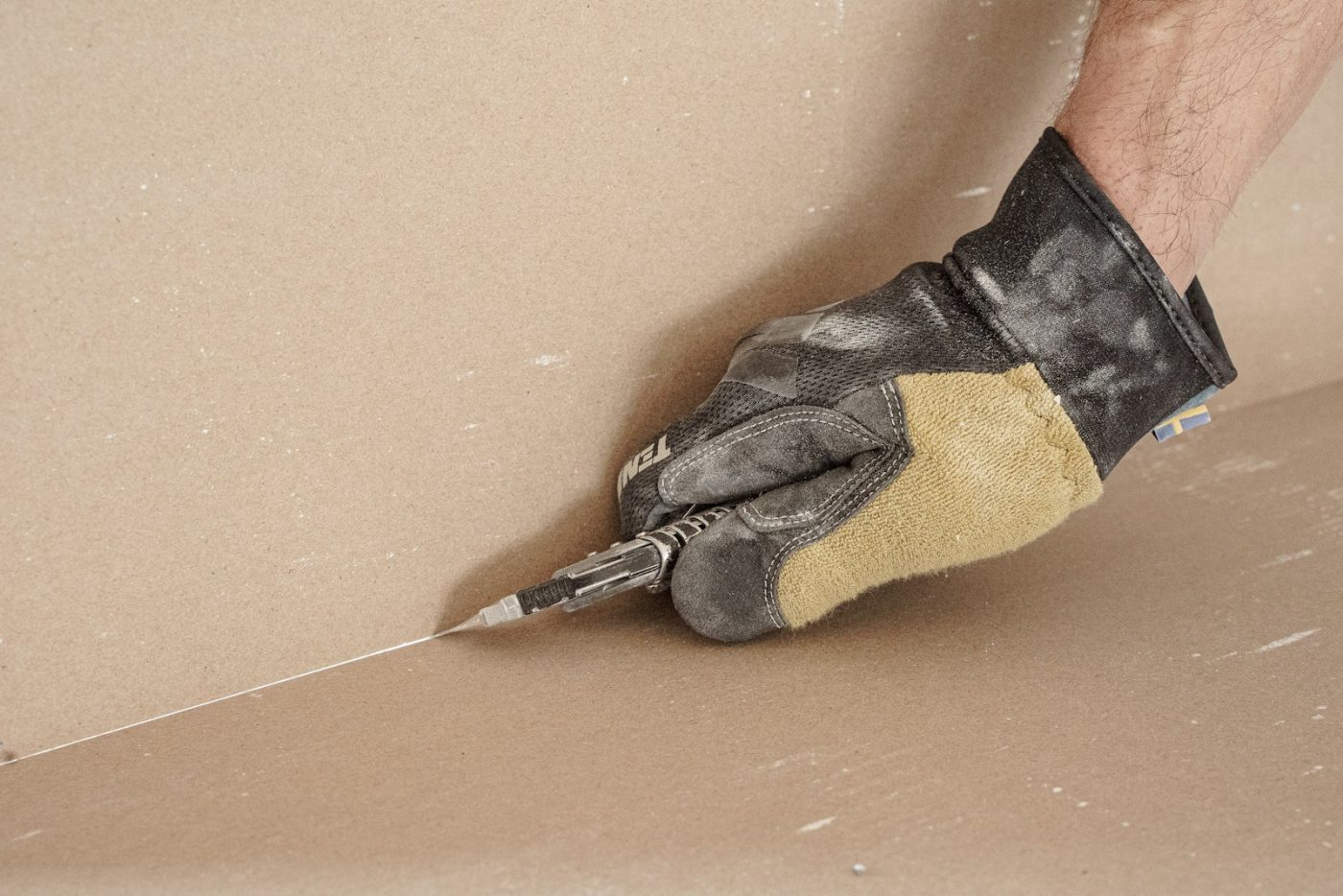
Score the paper first so water or steam can reach the glue behind it. A scoring tool, or a utility knife used at a shallow angle, cuts small holes across the panel without digging into the drywall face. Work top to bottom in strips no wider than your reach, then spray or steam one strip and wait 10-15 minutes before you pull.
Lift a corner at the bottom and pull upward and toward yourself at a low angle. The paper comes off in wide sheets when the glue is soft and in short tears when it is not, so stop and rewet instead of forcing it. Vinyl and washable papers usually have a top layer that peels away and leaves a paper backing, which you wet again.
- Score in a crosshatch pattern, not deep lines.
- Soak one panel at a time so it stays wet.
- Pull from the bottom edge upward.
- Rewet any spot that resists instead of tearing it.
How do I get the glue off the wall?
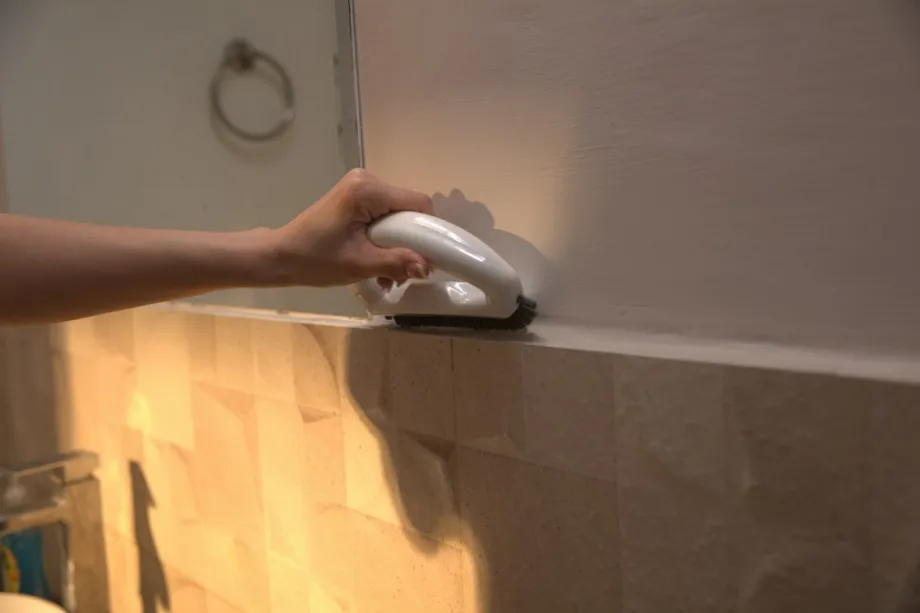
Wallpaper paste stays tacky after the paper comes off, and paint will not bond to it. Wash the wall with warm water and a large sponge, working from the top down so drips do not run over clean sections. Change the water when it turns cloudy.
For stubborn paste, mix one part white vinegar with three parts warm water and wipe the wall with a sponge or a spray bottle. Let it sit for a few minutes, then scrub with a plastic scraper. Rinse the whole wall with clean water to remove the vinegar residue.
- Wipe in overlapping passes so no patch gets missed.
- Scrub with a plastic scraper, never a metal blade.
- Rinse with clean water and a fresh sponge.
- Let the wall dry for 24 hours before patching.
What should I do when the paper will not budge?
Vinyl and painted-over wallpaper resist water because the surface will not absorb it. Score the paper with a wallpaper perforator, working in overlapping passes so the water reaches the backing glue. Then wet the wall and leave it for 15-20 minutes instead of a quick spray.
A steamer helps on thick paper and multiple layers. Hold the plate against one area until the paper loosens, then move on. Steam can drive moisture into drywall, so keep the plate moving and do not linger in one spot.
- Score vinyl and painted paper before wetting it.
- Re-wet dry patches rather than pulling harder.
- Use a steamer on thick or layered paper.
- Stop if the paper tears the drywall face.
How do I get the wall ready for paint?
Let the wall dry completely before you touch it. A stripped wall can look dry on the surface while the plaster underneath still holds moisture, and paint over that will blister or peel within months. Give it 24-48 hours in normal indoor conditions, longer in a humid room.
Then patch and sand. Fill nail holes, gouges and any spots where the paper tore the drywall face with lightweight spackle, let it harden, and sand it flush with 120-grit paper on a sanding block. Run your hand across the surface: you should feel no ridges at the seams or patches.
- Wipe the wall with a damp cloth to lift sanding dust, then let it dry again.
- Seal bare drywall or patched spots with a primer made for new drywall.
- Prime the whole wall, not just the patches, so the topcoat absorbs evenly.
- Run a damp hand over the wall to check for leftover glue before priming.
Frequently asked questions
Can I remove wallpaper without a steamer?
Yes. Scoring the surface and spraying it with hot water mixed with a little fabric softener loosens most paper-backed wallpaper. A steamer speeds up the job on thick or painted paper, but it is not required for every wall.
Does fabric softener really help remove wallpaper?
It helps water soak into the paper by breaking surface tension, so the water reaches the glue instead of beading up. Mix a capful into a spray bottle of hot water and apply it after scoring.
How long should I wait after spraying?
Give the water 10 to 15 minutes to work into the paper and glue before you pull. If the paper still resists, spray again and wait a little longer rather than scraping hard and gouging the wall.
Do I have to wash the wall after the paper is off?
Yes. Old adhesive left on the wall can stop primer and paint from bonding. Wash with warm water and a sponge, rinse, and let the surface dry completely before patching or priming.