
When to Repaint a House Exterior
Chalk on your hand, blisters on the south wall and bare wood on the sills each say something different about the paint. How to read the signs, why paint fails early, when to touch up rather than repaint, and what to put in writing with a painter.
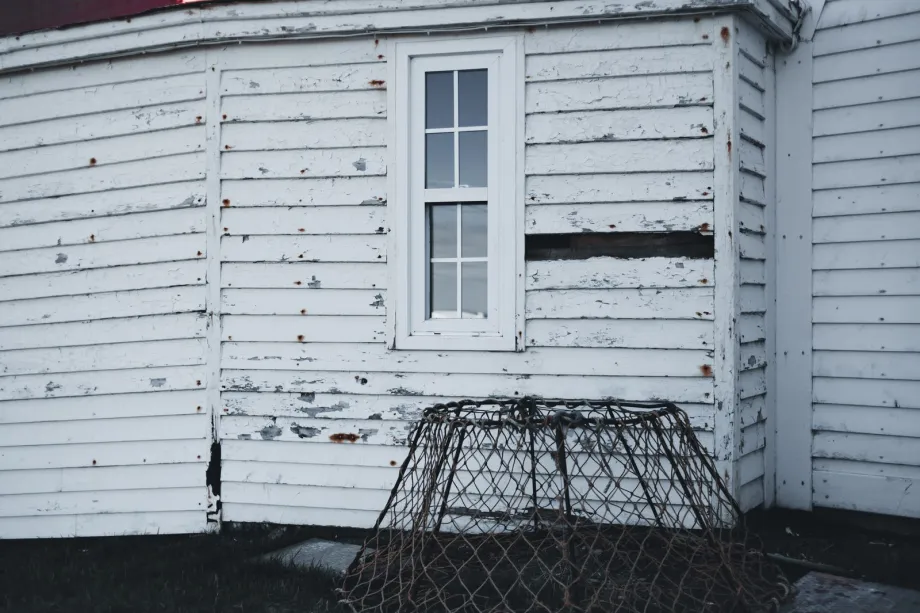
Visual signs that exterior paint needs replacement
Exterior paint wears out by design, and it tells you when it is going. Catching the signs early keeps the problem in the paint instead of in the siding and trim.
Surface degradation and pigment breakdown
Chalking occurs when solar radiation breaks down topcoat resins, leaving a powdery pigment residue on the surface. Wiping a hand across the siding leaves a dusty coating on skin. Light chalking is normal on aging paint, but heavy chalking washes down walls during rain, staining lower structures and thinning protective paint layers.
Fading happens unevenly across a building. South and west exposures absorb intense solar radiation, causing pigments to bleach long before shaded walls show wear. Color loss indicates that the resin network holding the paint film together is breaking down.
Film rupture and substrate exposure
Cracking appears as fine hairline fractures in the paint layer. As temperature swings cause wood to expand and contract, brittle paint loses elasticity and snaps. Left untreated, these hairline fractures widen into deep fissures, allowing liquid water to reach bare wood or masonry.
Peeling is a complete loss of adhesion between the paint layer and the surface underneath, or between consecutive paint coats. It often results from applying paint over unprimed wood, dirt, or wet surfaces. Once peeling begins, water enters behind adjacent paint edges and accelerates flaking across large sections.
Blistering presents as raised bubbles beneath the paint film. Heat blisters contain air or trapped solvent gas. They form when paint dries too quickly under direct sunlight, sealing the outer skin while volatile solvents underneath expand. Moisture blisters contain liquid water. They happen when water migrates through the substrate, pressing outward against the paint coating. Puncturing a fresh bubble reveals whether heat or moisture caused the failure.
Mildew appears as dark brown, green, or black spots that spread across shaded or damp areas. Spores feed on organic binders in older paint or on accumulated dirt trapped on textured surfaces. Mildew breaks down paint integrity while holding moisture against building materials.
Bare wood at window sills, door frames, and horizontal trim requires immediate attention. Horizontal surfaces collect standing water and snow. When paint wears away at these junctures, bare wood absorbs water quickly, leading to warping and wood rot.
Why exterior paint fails prematurely
When paint fails long before it should, the cause is usually moisture, poor preparation or coatings that do not suit each other.
Moisture migration from interior spaces
Water vapor generated inside a home by cooking, showering, and unvented appliances travels outward through walls. In cold weather, warm, humid air moves toward outer structures. Without an intact interior vapor barrier, moisture penetrates wall cavities and condenses behind cold exterior siding. This liquid water forces its way outward, pushing paint off the surface from behind. Fixing exterior peeling caused by interior moisture requires upgrading bathroom exhaust fans, repairing vapor barriers, or installing wall vents.
Substrate preparation errors
Paint cannot bond to loose chalk, dirt, mildew spores, or flaking coats. Applying new paint over an unwashed wall seals in debris, creating a weak layer that pulls away under thermal stress. Scraping off loose paint, pressure washing to remove dirt, and allowing wet substrates to dry completely are necessary steps. Painting over wood with high moisture content traps water inside the grain, leading to immediate blistering once sun heats the boards.
Inappropriate primer selection
Primers lock onto porous substrates and create a uniform bonding surface for topcoats. Using the wrong primer, or skipping primer entirely, causes early failure. Bare wood containing natural tannins, such as cedar or redwood, needs a stain-blocking primer. Without these, tannins bleed through topcoats and stain the finish. Masonry requires alkali resistant primers to withstand high pH levels in concrete and stucco. Applying hard topcoats over soft undercoats creates tension mismatches that lead to cracking.
Weather windows and seasonality
Plan the repaint for a stretch of weather that stays inside the temperature range on the can, day and night, until the paint has cured. A frost on a fresh latex film can ruin it. Siding in full sun gets far hotter than the air and dries paint too fast, leaving lap marks and heat blisters. Humid, still days slow drying and invite dew on the wet film by evening. Painters therefore follow the sun around the house, working on walls that are in shade or have already passed direct sunlight exposure. Morning dew must evaporate fully before painting begins, meaning west facing walls often need extra drying time early in the day.
Conducting an elevation inspection
Exterior wear is rarely uniform across a building. Performing a methodical inspection of all four elevations helps determine whether targeted maintenance or a full repaint is required.
South and west elevations suffer from heavy solar exposure. Inspect these walls for color fading, resin breakdown, chalking, and brittle paint along trim boards.
North elevations receive minimal solar heat and remain damp longer after rain or snow. Focus inspections here on mildew growth, algae staining, soft wood at trim joints, and peeling caused by trapped dampness.
East elevations experience morning sun and afternoon shade, displaying moderate wear. Check for thermal expansion cracks around window caulking and corner boards.
Inspect architectural microclimates on each elevation. Areas beneath wide roof overhangs stay dry and shaded, preserving paint longer than exposed gable ends, dormers, and window sills.
Touch-up maintenance versus full repainting
Deciding between localized touch-up work and complete repainting depends on the extent of failure and the age of the existing paint film.
If paint failure is confined to small patches of damaged wood, minor cracking along window frames, or localized peeling on a single south facing wall, spot repairs are sensible. Spot maintenance involves scraping bare areas down to sound edges, sanding borders smooth, applying primer to bare substrate, and topcoating the repair area.
Matching old paint with new paint is difficult. Weathering changes both pigment color and sheen level. A fresh coat of the original paint formula will often appear darker and glossier than surrounding aged paint. On continuous siding panels, spot touch-ups create noticeable patches. Once cracking, peeling or chalking is spread across whole walls rather than in a few spots, or an even look matters, a full repaint is the better use of money.
Written scope of work for painting contracts
The scope of work should detail preparation standards clearly. Spell out the washing and mildew treatment, scraping of loose paint, sanding of edges, priming of bare wood and recaulking of open trim joints. The contract must state acceptable moisture limits for wood substrates before primer application.
Specify exact paint products by manufacturer, brand line, sheen level, and color codes. Contracts should mandate the number of primer coats and topcoats to be applied, along with minimum film thickness requirements.
Ensure the written agreement defines cleanup standards, daily site management, property protection protocols for landscaping and windows, weather delay guidelines, and clear warranty terms covering material defects and labor failures.
Frequently asked questions
How can you tell the difference between mildew and dirt on paint?
Apply a few drops of household bleach to the dark area. If the spot bleaches white or disappears within a couple of minutes, it is mildew. Dirt stays dark under bleach and simply wipes away with water.
Is it acceptable to spot paint bare wood spots instead of painting the whole house?
Spot priming and painting bare wood protects the substrate from rot. However, fresh paint rarely matches aged exterior paint because of sunlight fading and weathering. Spot repairs work best as temporary maintenance until full repainting is scheduled.
Does chalky paint mean the house needs repainting?
Not on its own. Light chalking is normal as exterior paint ages. Heavy chalk that comes off thickly on your hand or streaks down onto brick below suggests the film is wearing thin. The chalk has to be washed off before repainting, and some paint makers call for a primer over chalky surfaces.
Can high interior humidity cause exterior paint to peel?
It can. Water vapor from showers, cooking and unvented appliances moves into the walls, condenses on the cold sheathing and siding in winter and pushes the paint off from behind. Peeling down to bare wood outside bathrooms and kitchens is a typical sign, and the cure starts inside with exhaust fans.